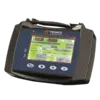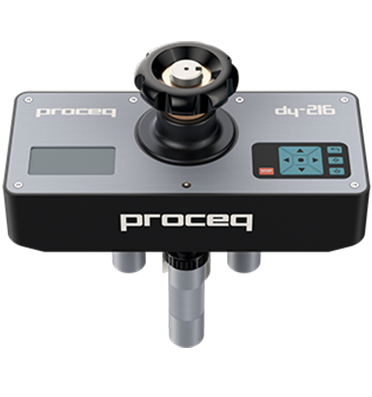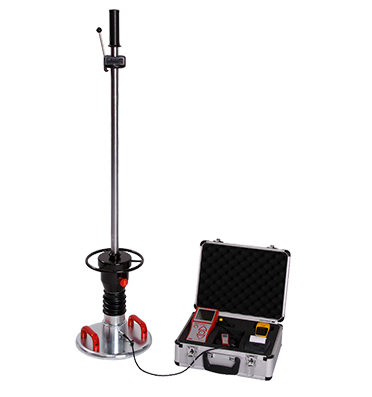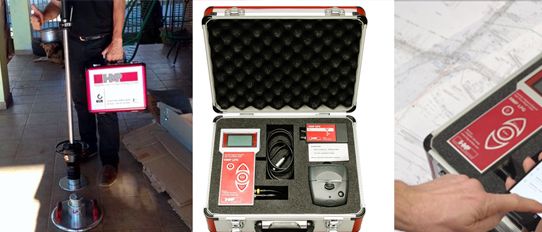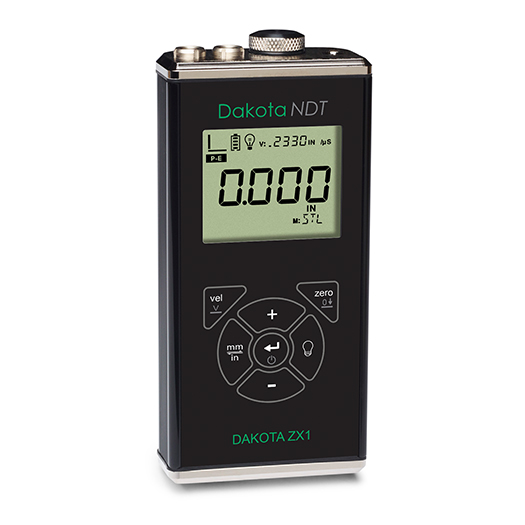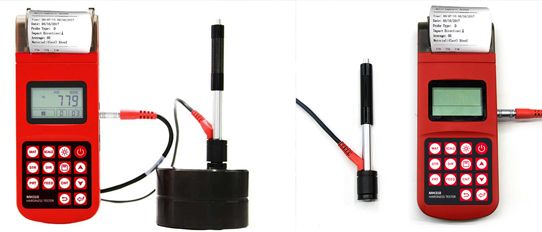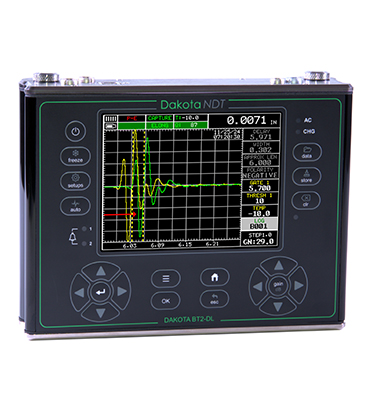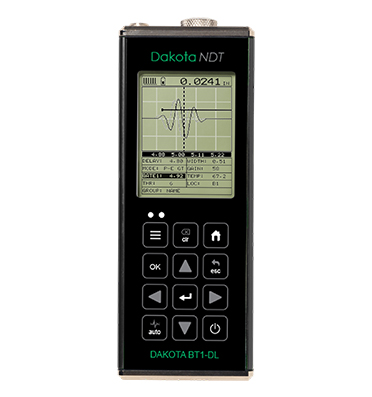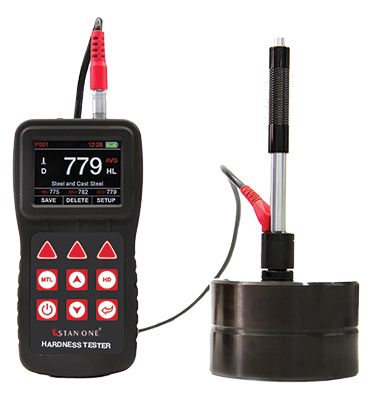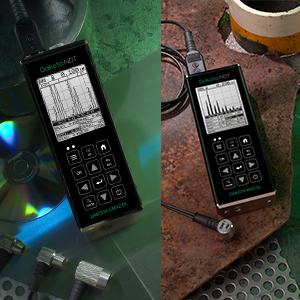
Uniqueness : The first hardness tester that connects
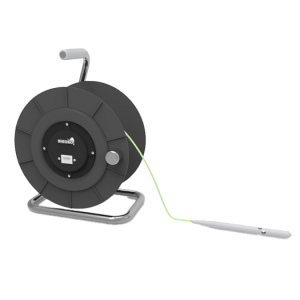
directly to a PC and to the portable Equotip 3 testing
platform. |
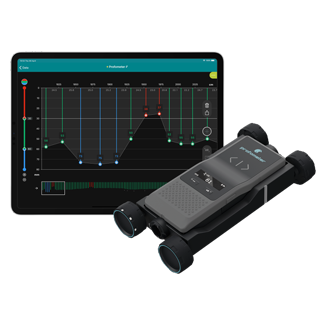
User guidance : The user is instructed precisely when
to apply and release the test loads; the displayed
signal curve enables the user to judge the quality of the
measurement. |
Repeatability : Unmatched by the competition. |
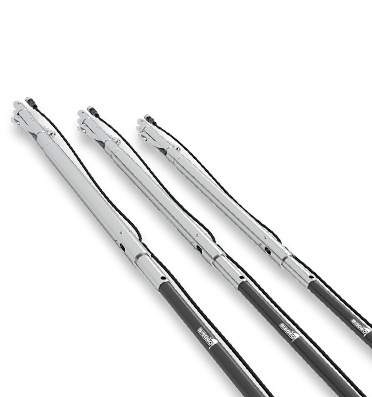
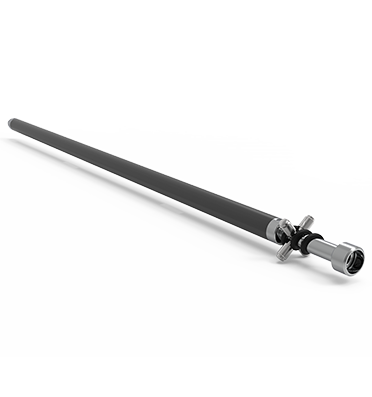
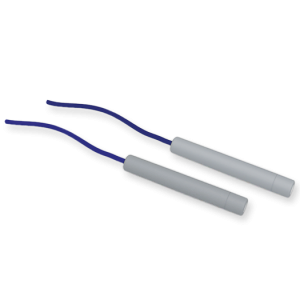
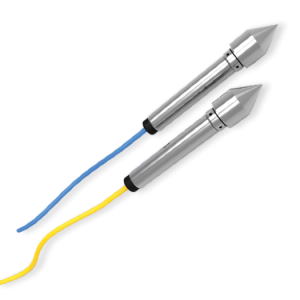
Robustness : The new Equostat 3 indenter is extremely
durable; the probe features a protective rubber sleeve. |
Versatility : Measuring clamp, magnetic feet, and special
feet adapt to most sample shapes. |
Standards conformance : Method conforms to DIN
50157 and ASTM B724 with ISO 18265 and ASTM E140
conversions, respectively. |
Software : The included PC software package Equolink 3
addresses professional data management needs. |
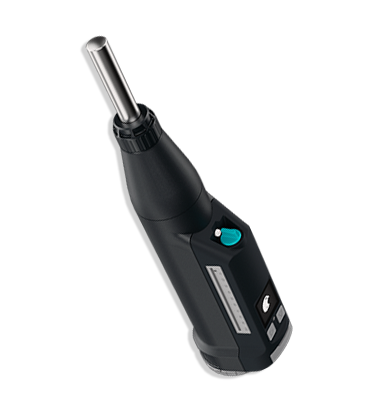
| Equostat 3 Probe |
| Measuring range |
19-70 HRC; 19-70 HMMRC; 67-638 HB; 35-950 HV; 60-86 HRA; 29-107 HRB; 225-2250 MPa; 69-94 HR15N; 88-96 HR15T |
| Resolution |
0.1 μm; 0.1 HRA; 0.1 HRB; 0.1 HRC; 0.1 HRE; 0.1 HRH; 0.1 HR15N; 0.1 HR15T; 1 HB; 1 HV; 0.1 HS; 1 MPa |
| Measuring accuracy |
~ ± 1.5 HRC over entire range |
| Maximum test hardness |
70 HRC |
| Test direction |
any direction (no correction required) |
| Test loads |
10 N / 50 N (probe 50 N) |
| Diamond indenter |
angle 100.0° ± 0.5° |
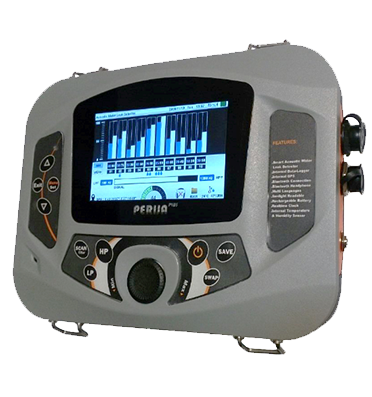
| Equotip 3 Indicating Device |
| Dimensions |
170 x 200 x 45 mm (6.7 x 7.9 x 1.8 inches) |

| Weight |
780 g (27.5 oz) plus battery pack 120 g (4.2 oz) |

| Display |
4.7" QVGA LCD with adjustable contrast and backlight |
| Internal data storage |
100'000 - 1'000'000 values (depending on data type) |
| Interface |
Ethernet, USB 1.1, RS 232 |
| Battery type |
rechargeable Li ion or 3 standard size "C" cells |
| Battery max. charge voltage |
4.2 V |
| Battery operation period |
typically 10 hours |
| Operating temperature |
0 to + 50 °C (32 to 122 °F) |
| Humidity |
non-condensing, 90% max |
| Item Code |
Equostat 3 |
| The Portable Rockwell Principle : |
The hardness testing principle in Equostat 3 follows the Rockwell stationary test. During measurements with the Equostat
3 probe, a diamond indenter is forced into the test piece to be measured and then released back out of the material. The
indentation depth of the diamond is continuously measured while the load is applied and released. From the indentation
depths d1 and d2 recorded at two defined loads, the difference is calculated: Δ = d2 – d1. The difference Δ is a measure of
the hardness of the material, and is independent of the test direction.
There are three main differences to traditional stationary Rockwell tests:
1. The test loads are lower.
2. The Equostat 3 indenter is sharper.
3. The holding times during a test are shorter.
|
| Functionality that fits your Needs : |
Measurement on Basis of DIN 50157 :
Both depth measurements d1 and d2 are taken at
preload, first during application (d1) and then after
release of the total load (d2). The difference between
the depths d1 and d2 originates from the deformation
response of the material to penetration.
Measurement on Basis of ASTM B724 :
The depth measurements are taken at preload (d1) and
at the total load (d2), respectively.
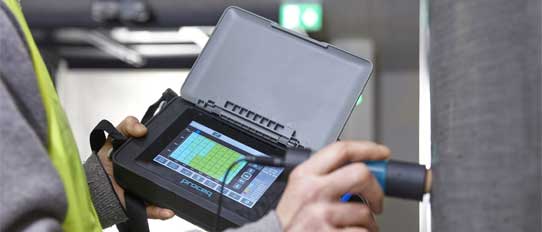
User guidance dialogs :
The measurement signal is displayed in real-time on
a PC screen or the Equotip 3 indicating device. This
allows the user to judge the quality of the ongoing
measurement through evaluation of the signal curve.
|
| Measurements are Non-Destructive : |
Due to the low test loads, Equostat 3 only penetrates a few micrometers
of the test piece, making the test particularly suitable for:
• Scratch-sensitive and polished surfaces
• Thin parts, profiles and pipes with a wall thickness ≤ 2 mm
• Hardness profiles in heat-affected zone of welds
|
|
| Probe setup |
Minimum test piece thickness |
Maximum test piece thickness |
Test piece surface condition |
Surface curvature |
Maximum test piece hardness |
Minimum spacing |
| 50 N probe with clamp |
1 mm at ~20 HB
130 μm at ~70 HRC |
41 mm |
recommended mean surface roughness Ra < 2 μm to minimize data scatter |
|
70 HRC |
three times the diameter of a test indentation |
50 N probe with round standard foot (ø = 42 mm) |
N/A |
foot to be used for plane surfaces |
| 50 N probe with tripod |
very small curvatures acceptable |
| 50 N probe with long foot |
very small curvatures acceptable |
recommended < 60 HRC |
| 50 N probe with special feet |
18 - 70 mm radius of curvature or 70 mm - ∞ |
70 HRC |
The Right Measuring Setup for the Application : |
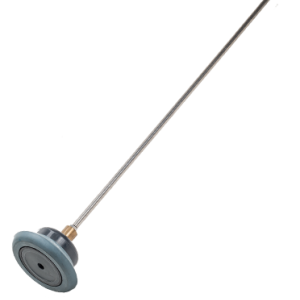
To access various test locations and to accommodate user preferences, the Equostat 3 offers a range of adaptors.
The measuring clamp can easily be adjusted to the sample thickness.
Additional adaptors for bolts, wires and thin tubes further allow measurements
on different
sample geometries.
The round foot, the tripod and the long foot are designed for flat surfaces.
The magnetic insets in the feet aid in the testing of steel samples.
The two special feet can be adjusted to the sample radius to be
used for cylindrical samples from 18 mm - 70 mm and 70 mm - ∞,
respectively.
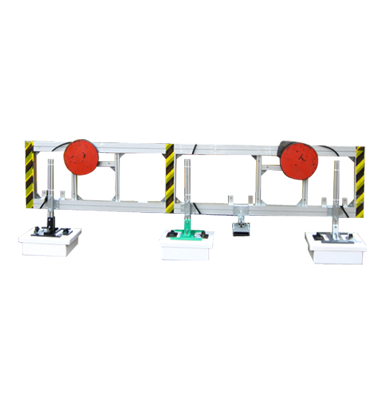
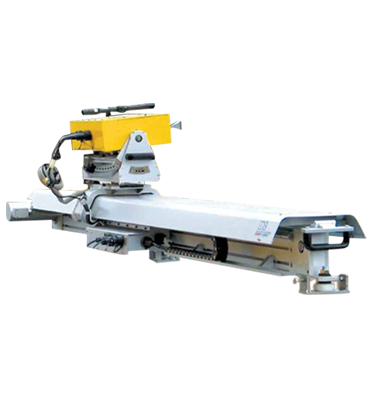
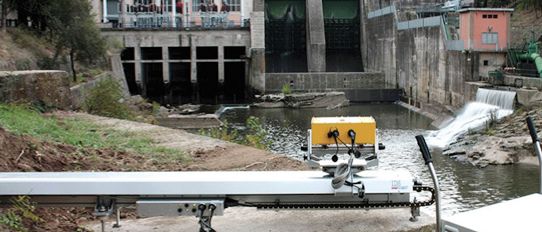
Equostat 3 can be automated with third-party remote one-axis test
setups and the Equotip 3 Automation Package.
|