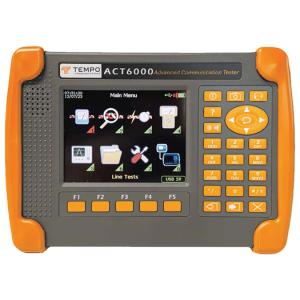
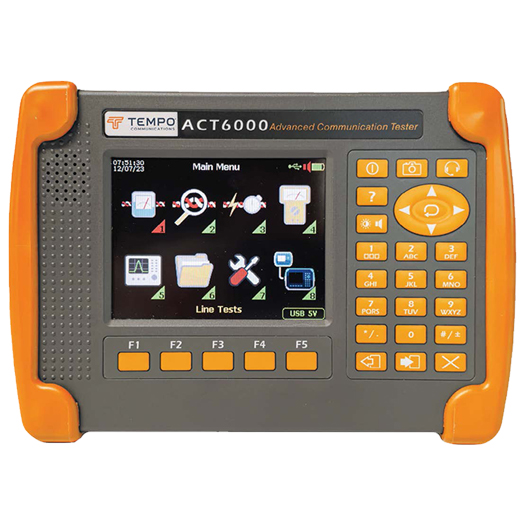
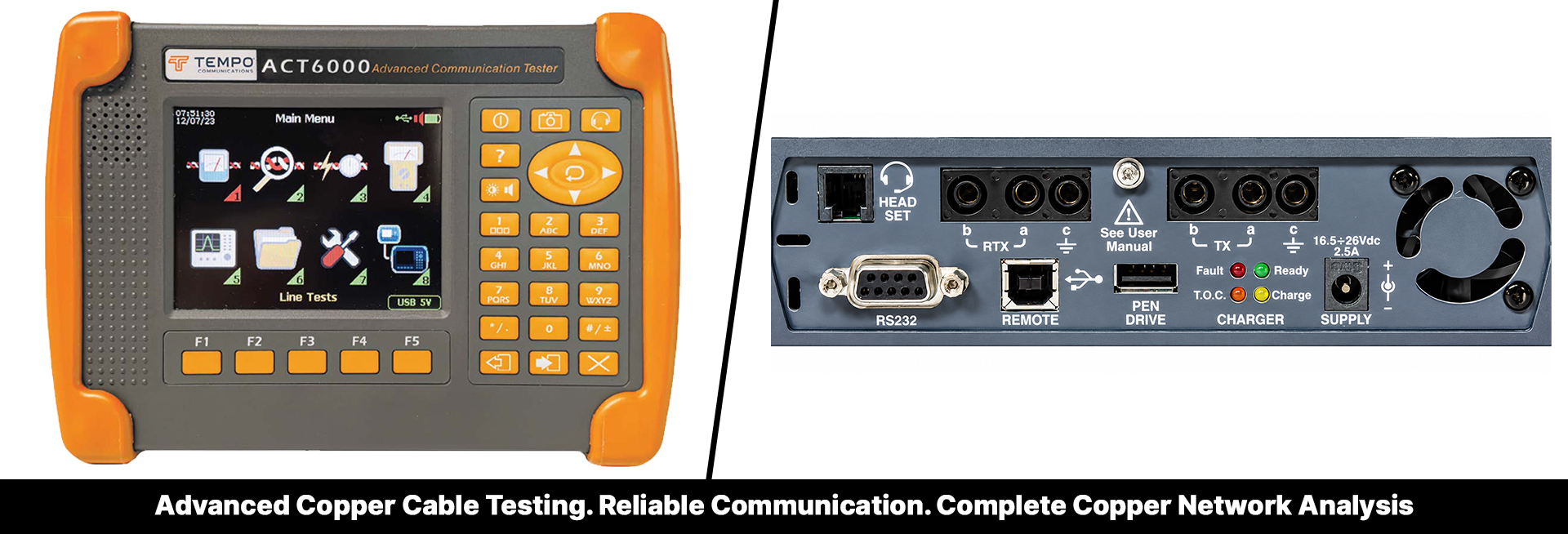
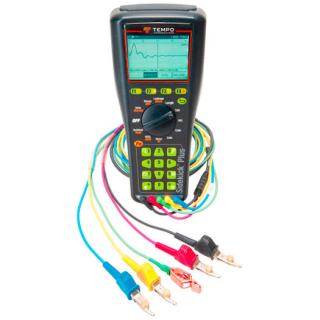
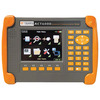
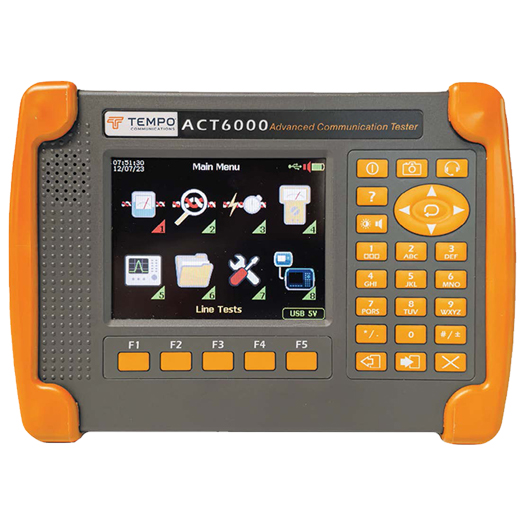
ACT6000 Advanced Communication Tester
Test Cables for Signal-Carrying Capability: ACT6000 Advanced Communication Tester for PLCC, SCADA, Railway and Airport Circuits
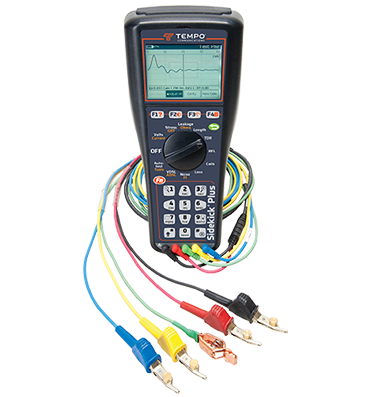
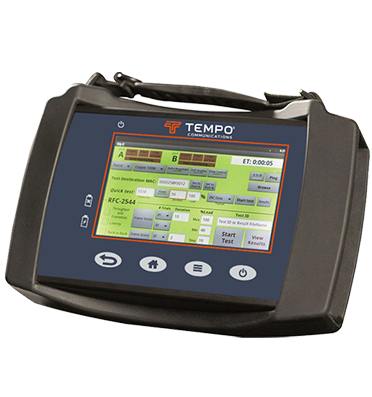
A communication cable can pass a continuity check and still carry a weak, noisy or intermittent signal. The Tempo ACT6000 advanced communication tester helps maintenance teams establish whether a compatible copper link or carrier channel can support its service, investigate recurring communication problems, and check the result after repair.
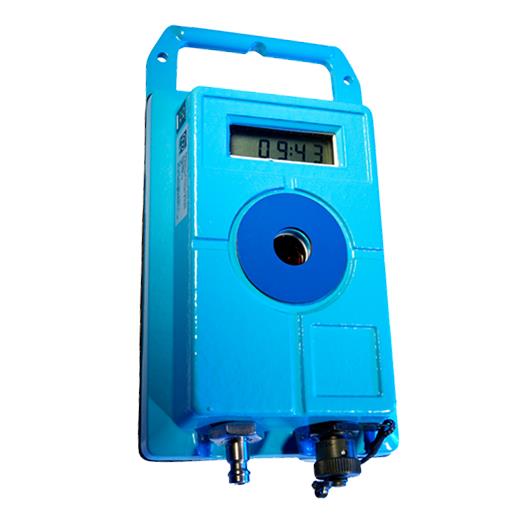
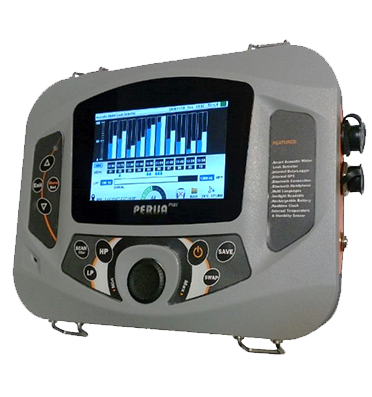
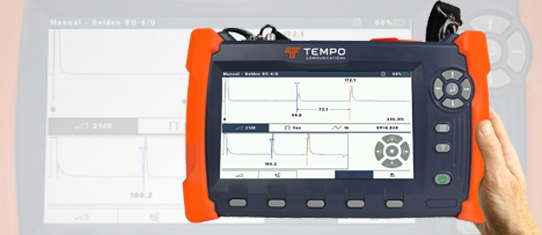
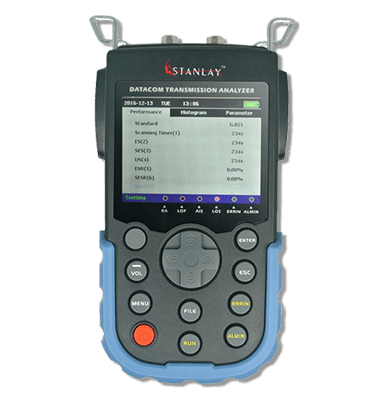
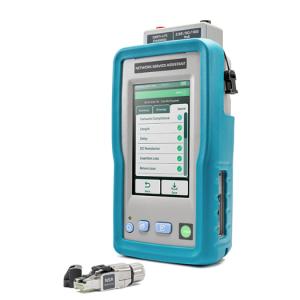
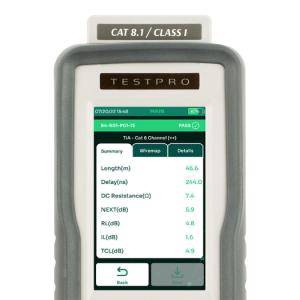
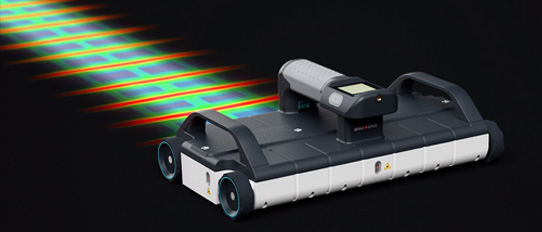
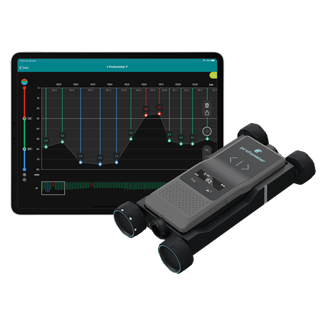
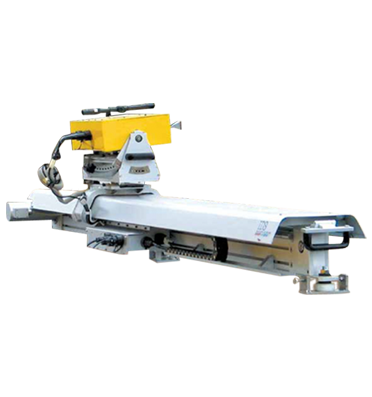
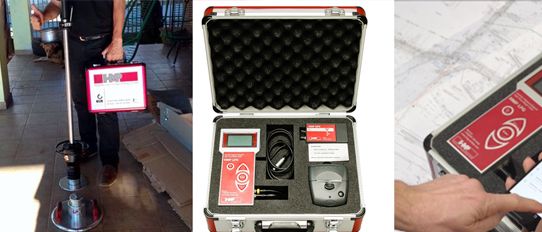
It puts a level generator, selective level generator and selective level meter, a spectrum and network analyser, return loss, longitudinal balance, crosstalk and micro-interruption measurement, a TDR and resistance fault locator and a digital multimeter into one handheld instrument.
Teams that currently specify a transmission measuring set, a transmission test set, a digital level meter cum level oscillator or a level meter and level oscillator will recognise the core functions, with generator coverage from 20 Hz to 6 MHz.
For power transmission companies, the question is usually about the PLCC channel.
On a PLCC system the high-voltage conductor itself carries voice, data, telemetry and protection signals between substations, so there is no separate cable to inspect.
When a channel turns weak or unstable, the team needs to know whether it still carries the frequencies the equipment needs, with enough signal left at the receiver, within its loss budget. ACT6000 works as a PLCC test set for transco communication teams: a PLCC level meter and level generator for channel levels, noise and frequency response, and a PLCC testing instrument for PLCC insertion loss measurement, with a unit at each end running a step generator and a receiving analyser. Use it for PLCC channel testing before accepting or replacing a channel, for PLCC noise and interference tests, and to compare a channel before and after adjustment. The same instrument is a substation communication tester for the copper circuits around the PLCC panel, measuring return loss and balance and locating cable faults.
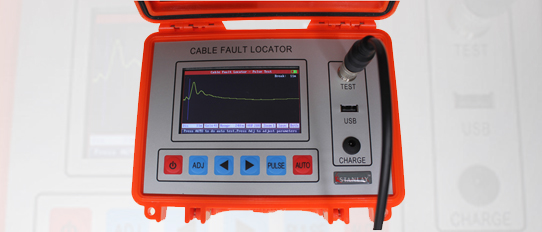
SCADA communication link testing for DISCOMs – SCADA depend on communication links that carry readings and equipment status from substations and remote terminal units to the control centre. When those messages become unreliable, the fault may lie in the cable or the channel, even though the circuit passes a continuity check. ACT6000 answers two plain questions: is enough signal reaching the other end, and can this channel carry the frequencies our equipment needs. A return loss meter and a longitudinal balance meter show whether terminations, joints or nearby switching equipment are degrading the link. Crosstalk (NEXT and FEXT) checks show whether another service in the cable is disturbing it. A micro interruption and impulsive noise meter captures brief signal drops and bursts, and the event times can be compared with switching and equipment logs. A cable fault locator based on TDR and resistance fault location then finds the defect. One unit pre-qualifies suitable copper pairs from one end; where a measured end-to-end loss is needed, two units are used.
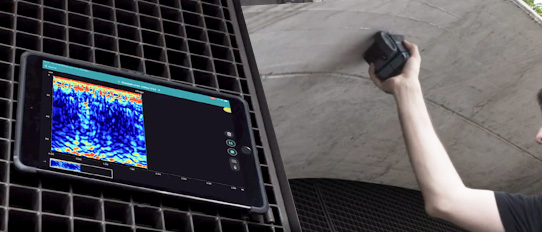
Railways rely on quad and PIJF copper cable between stations, equipment rooms, field equipment and trackside radio base stations. As a quad cable tester and for PIJF cable testing, ACT6000 serves as a railway telecom cable tester: a railway copper cable attenuation crosstalk tester for commissioning a new or repaired section, and a signalling cable tester for investigating weak or unreliable links, interference between circuits and intermittent failures. Its TDR cable fault locator for railway cable finds opens, shorts and impedance changes from one end, resistance fault location handles resistive faults, and results are saved so the cable can be compared before and after repair.
At airports, Communication, Navigation and Surveillance teams keep copper voice, intercom, telemetry and remote-equipment links in service. When a copper service between operational locations becomes noisy, unstable or difficult to commission, ACT6000 helps establish whether the path itself is at fault. It is used as a CNS copper circuit tester for ground communication circuit testing, and as an analogue line tester that checks loss, noise, balance and crosstalk and records intermittent drops. The test is chosen only after the actual interface and acceptance criteria are identified, using your approved circuit access and any far-end equipment needed, and the before and after results are retained.











.png)

.jpg)




.png)

.png)
.png)






















.png)




.png)










.png)


.jpg)